
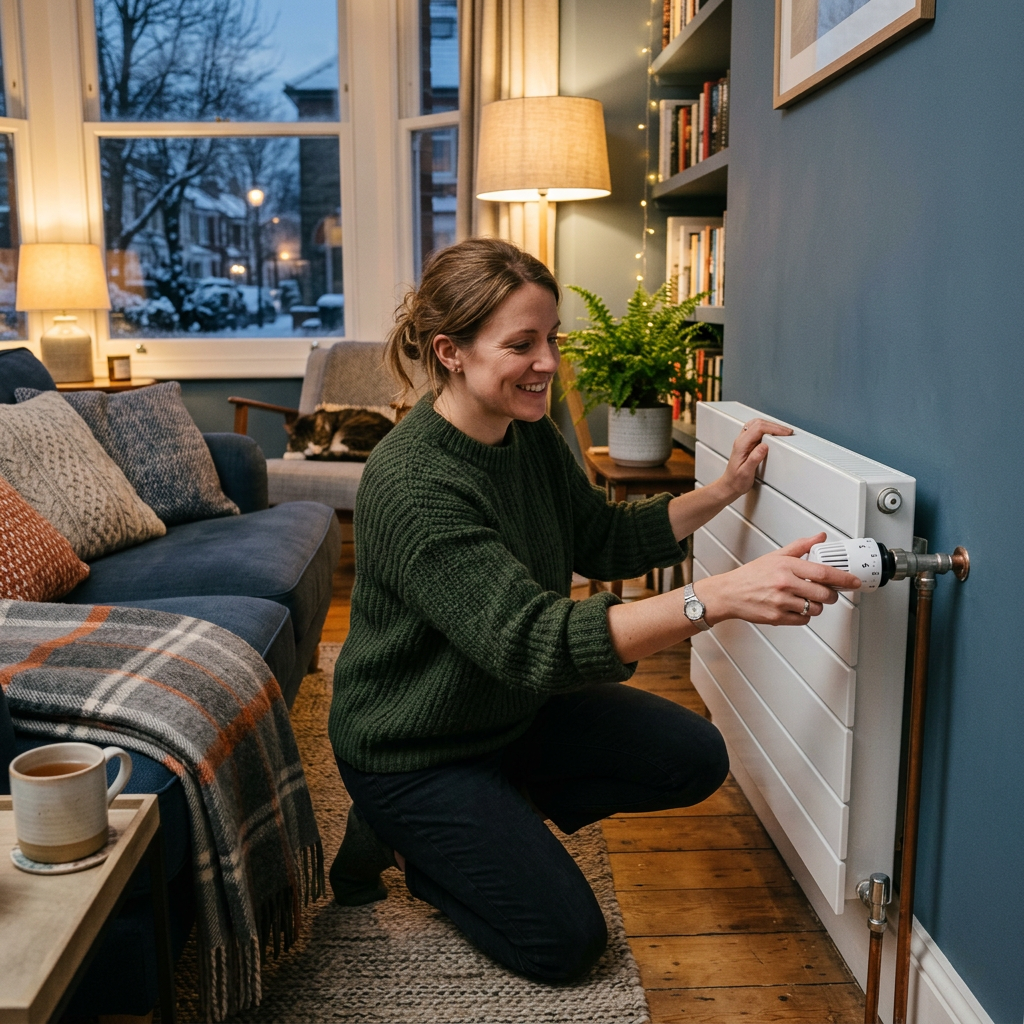
Why Heating Efficiency Matters More Than Ever
Heating accounts for around 55% of the average UK household’s annual energy spend. With energy prices remaining volatile and the cost of living biting hard, making your heating system work smarter — not harder — is one of the most impactful things you can do to reduce your bills this winter.
The good news is that many of the most effective changes cost nothing at all. Others require a small upfront investment that pays for itself within weeks. Here’s how to make your home heat more efficiently. If you want to compare cheap energy deals, it only takes a few minutes.
Optimise Your Boiler Settings
Your boiler is the engine of your home heating system, and most UK households run theirs at higher temperatures than necessary.
Turn Down the Flow Temperature
The flow temperature is how hot your boiler heats the water before sending it to your radiators. Most combi boilers are factory-set at 80°C, but for most homes, 60°C is perfectly adequate — and at this lower setting, a modern condensing boiler can run in its most efficient ‘condensing’ mode, reducing gas consumption by up to 10%. You can also find cheaper energy to see what’s available.
Check Your Timer and Thermostat
Set your heating to come on 30 minutes before you need it rather than cranking it up suddenly. A lower, steady temperature is far cheaper than heating a cold house quickly. For every degree you lower your thermostat, you can save around 4% on your heating bill — turning it down from 21°C to 19°C could save you £80–£100 a year.
Improve Radiator Performance
Your radiators may be working much harder than they need to — or not as hard as they should.
Bleed Your Radiators
If your radiators are cold at the top but warm at the bottom, they have trapped air inside. Bleeding them takes five minutes and allows hot water to circulate fully, meaning they heat your rooms faster and more effectively. Do this at the start of every winter season.
Use Thermostatic Radiator Valves (TRVs)
If you don’t already have TRVs on your radiators, fitting them is a worthwhile investment. They allow you to control the temperature room by room — so you can keep bedrooms cool while warming the living room. Don’t put a TRV in the same room as your main thermostat, as they can conflict with each other.
Reflector Panels Behind Radiators
Up to 25% of heat from wall-mounted radiators can be lost straight into the wall. Fitting reflective foil panels behind them — available for just a few pounds — bounces heat back into the room. It’s a tiny investment with a measurable impact.
Draught-Proof Your Home
Draughts are one of the most overlooked causes of heat loss in UK homes. Gaps around doors, windows, loft hatches, and floorboards can let in a constant stream of cold air, forcing your heating to work overtime.
- Door draught excluders: A simple fabric draught excluder costs under £5 and can make a noticeable difference to hallways and living rooms.
- Window sealant strips: Self-adhesive foam strips around window frames take minutes to fit and cost very little.
- Letterbox and keyhole covers: These small gaps are often forgotten but let in a surprising amount of cold air.
- Chimney balloons: If you have an unused chimney, a draught-excluding chimney balloon can save up to £90 a year.
Insulate Smarter
Good insulation is the single biggest factor in keeping heat in your home. If your property was built before the 1990s and hasn’t been updated, there’s likely significant heat escaping through your walls, roof, and floors.
Loft Insulation
Up to 25% of heat is lost through an uninsulated roof. Topping up your loft insulation to 270mm (the recommended depth) is one of the most cost-effective improvements you can make. Many energy companies offer subsidised or even free loft insulation under the Great British Insulation Scheme — check if you qualify.
Cavity Wall Insulation
If your home has cavity walls (most UK homes built after 1920 do), filling them with insulation can cut heat loss dramatically. Again, government schemes may be available to help with costs.
Use Heat Where You Need It
Heating rooms you’re not using is pure waste. A few simple habits can make a real difference:
- Keep internal doors closed to contain heat in the rooms you’re using.
- Use a hot water bottle or electric blanket in the bedroom instead of heating the whole room overnight.
- Consider a plug-in electric panel heater for a single room you use for short periods — it can be cheaper than heating the whole house.
Compare and Switch Your Energy Tariff
Even the most efficient heating system will cost more than it should if you’re on the wrong energy tariff. With the energy market stabilising, competitive fixed-rate deals are becoming available again — and switching suppliers could save you £200–£400 a year on top of all the efficiency gains above.
The quickest way to find out if you’re overpaying is to compare deals now. Enter your postcode and current usage and you’ll see exactly what’s available in your area — it takes under five minutes and could deliver significant savings before winter sets in.